Winter advice
Keeping Your Boat Afloat in Winter on Lake Geneva
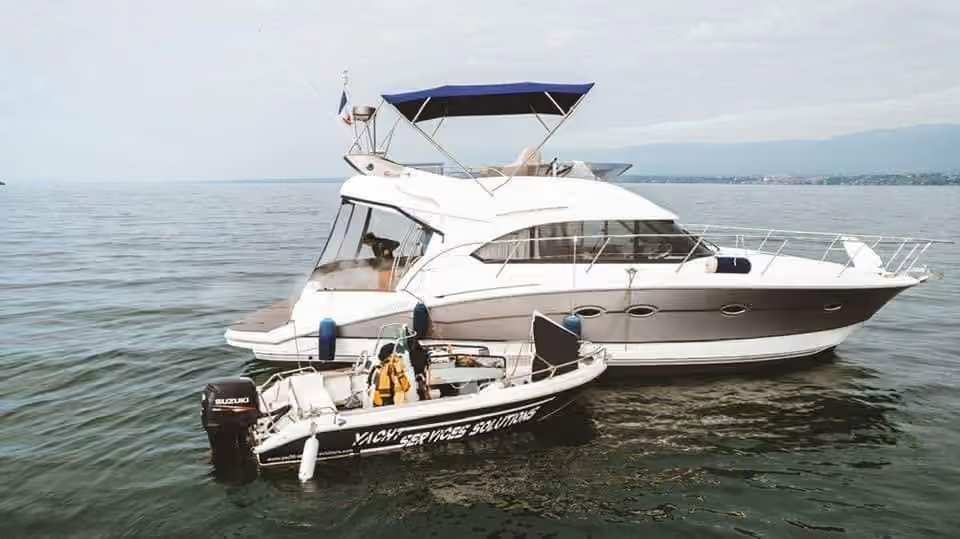
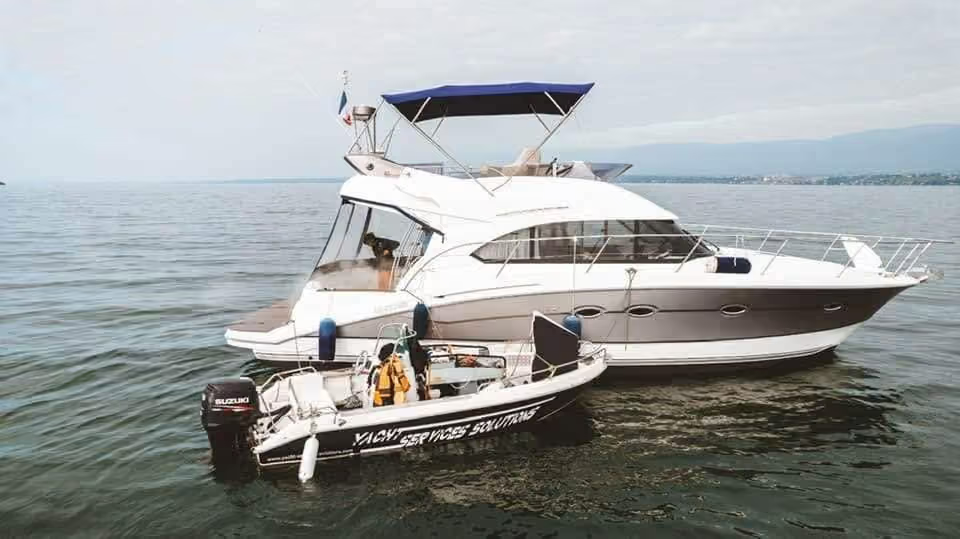
Yes, you can keep your boat afloat through the winter on Lake Geneva: the lake does not freeze over, and plenty of boats spend the cold months at their berth. But wintering afloat comes with its own risks: night frost in the water systems, batteries running flat, a bilge pump that no longer kicks in, bise and snow on the cover. Careful end-of-season preparation and regular visits until spring make all the difference.
Wintering afloat on Lake Geneva: how it differs from wintering ashore
Lake Geneva does not freeze over: its body of water is simply too large. The underwater part of the hull therefore sits in water that does not turn to ice. The air, however, can drop below zero at night, and anything above the waterline or inside the boat’s systems is exposed to it. And unlike a boat tucked away in a shed, a boat afloat keeps taking the wind, the rain and the snow.
Wintering ashore at a yard has its own advantages, such as access to the underwater hull. Wintering afloat is neither better nor worse: it is a different choice, and it mostly calls for preparation and a regular presence.
The risks of a winter afloat
Night frost
Fresh water left in tanks, pipes, the water heater or the water pump can freeze on a cold night and crack whatever holds it. On an inboard engine cooled by lake water, the raw-water circuit holds water too, and if it has not been protected it faces the same risk. In hard cold spells, spray whipped up by the bise can also ice over decks, lifelines and mooring lines, which makes moving around on board slippery.
Batteries
Cold reduces a battery’s capacity, and a discharged battery copes with frost less well than a charged one. Some equipment draws power constantly, even with the boat locked up. And a flat battery in midwinter also means a bilge pump that can no longer run.
The bilge pump
Rain, melting snow, a leaking portlight or through-hull, a weeping stern gland: water always finds a way in. The automatic pump relies on the battery and on its float switch, which can jam on a bit of debris. A bilge filling up slowly with nobody there to notice is one of the scenarios owners dread most in winter.
Bise, snow and covers
The bise loads the mooring lines for days on end, lifts loose covers and wears away at anything that rubs. Snow adds weight: a cover that sags into pockets fills with water and snow, stretches out of shape or gives way.
Damp
A boat shut up for months builds up condensation. Without ventilation, mould and musty smells settle into lockers, upholstery and bedding.
Preparing a boat for winter afloat: the checklist
- Engine: have it winterised following the manufacturer’s recommendations (oil change, frost protection for the cooling circuit), yourself if you have the skills or by a professional.
- Fresh water: drain the tanks, water heater and pipes, or protect them as the manufacturer recommends.
- Heads and holding tank: tank emptied and system flushed.
- Batteries: fully charged, clean and tight terminals, and a clear plan, shore charger or battery switch, that keeps the bilge pump powered.
- Bilge pump: tested, strainer clear, float switch moving freely.
- Through-hulls: close the seacocks that do not need to stay open, and check the hose clamps.
- Lines and fenders: doubled, protected against chafe, fitted with snubbers.
- Sails: ideally taken off for the winter; failing that, furled tight and lashed.
- Cover or canopy: taut, no pockets, sloped so water runs off, with some ventilation.
- Interior: fridge emptied and propped open, cushions stood on edge, lockers left ajar, linen taken home.
- Cleanliness: clean before you cover up, so you are not sealing in dirt and damp for months.
- Contacts: make sure the harbour office knows how to reach you, or whoever is looking after the boat.
Through the winter: keep watch, especially after a blow
Preparation is not enough on its own: a boat wintering afloat needs to be watched. A useful visit checks the lines and any chafe, the tension of the cover, water in the bilge and whether the pump works, the batteries or charger, and ventilation and damp below. Those visits matter most after every bise episode, after snowfall or during a cold snap.
A winter afloat without the worry
If you do not live by the lake, our annual boat monitoring plan is designed for exactly this: regular visits all year round, winter included, a check after every bise episode or weather warning, a photo report after each visit and an immediate alert if anything looks wrong. At the end of the season, our boat concierge service gets the boat ready for winter, re-covering and securing included, and for anything mechanical we coordinate a partner yard. Based in the port of Nernier, we work in the marinas of the French shore of Lake Geneva, from Chens-sur-Léman to Évian-les-Bains: see our service area. For Geneva residents whose boat sits on the French side, it is the simplest way to keep an eye on it from home. Talk to us about your boat.
Frequently asked questions
Your questions.
Does Lake Geneva freeze in winter?
No, the lake does not freeze over: its body of water is far too large. The air can still drop below zero at night, though, which threatens any water left in the boat's systems, and in very cold spells spray driven by the bise can ice up on decks and mooring lines.
Should I leave my boat plugged into shore power over winter?
It depends on your marina's rules and on the condition of the electrical installation. A charger keeps the batteries topped up, but a tired socket or cable is a risk in itself. Either way, someone needs to check regularly that charging is actually happening.
How often should a boat be checked in winter?
There is no universal rule: it depends on the boat, how exposed its berth is and its general condition. We agree the frequency with each owner, usually weekly or fortnightly, stepped up in winter and after every weather warning.