Winter advice
Protecting Your Boat from the Bise on Lake Geneva
To protect a boat from the bise on Lake Geneva, the work happens before the wind and right after it. Before: doubled mooring lines with chafe protection, enough fenders at the right height, a tight cover and nothing left flapping on deck. After: a proper check as soon as the wind drops, because the quiet damage, a half-chafed line or a slowly filling bilge, is the expensive kind.
Why the bise is hard on boats kept afloat
The bise is Lake Geneva’s cold, dry north-easterly wind, funnelled between the Jura and the Alps. It can turn up in any season, but it is more frequent and sharper in the colder months, and it often settles in for several days. On the water it raises a short, steep chop.
On the French shore, every marina is exposed in its own way, depending on how its entrance, breakwaters and your berth are oriented. For a boat on a pontoon, the real threat is rarely a single gust. It is duration: hour after hour of repeated loads on lines, cleats and fenders. Wear, more than impact, is what eventually parts a line or scars a hull.
Before the wind: a bise-ready checklist
Mooring lines and cleats
- Double the main lines, especially those on the windward side. If one chafes or slips, the other carries the load.
- Add chafe protection wherever a line rubs: fairleads, the edge of the quay, the end of a finger pontoon. A sleeve or a length of hose usually does the job.
- Fit mooring snubbers (springs or rubber compensators). They soak up the jerks that fatigue cleats and deck fittings.
- Inspect the rope itself: a line that has gone stiff, faded or fuzzy should be replaced before winter, not after.
- Get the slack right: not bar-tight, not loose. The boat should ride the chop without slamming into the quay or the boat next door. Lake Geneva’s water level is regulated and shifts through the year, so lines set in summer may need adjusting in winter.
- Check the cleats and their fastenings. Any play is worth dealing with now.
Fenders
- Rig enough of them on the exposed side, at the actual contact height: quay, finger pontoon or neighbouring boat.
- Tie them to something solid, such as a cleat or a stanchion base, rather than to a lifeline alone.
- A soft fender, or one that has ridden up onto the deck, protects nothing. Pump it up or replace it.
Covers, canopies and anything that catches the wind
- Keep the cover taut, with sound straps and eyelets, no pockets and no loose panels. A flapping panel tears sooner or later and rubs the gelcoat on its way.
- On a sailboat: roll the genoa tight with a few turns of sheet around the drum so it cannot unfurl, furl and tie down the mainsail, lock the boom, and lead the halyards away from the mast to stop the slapping and the wear.
- Bimini, sprayhood, cushions, tender: stow them or lash them down properly.
- Close hatches and portholes, and make sure the cockpit drains are not blocked by leaves.
Power and bilge
- Keep the batteries charged and the battery switch set so that the automatic bilge pump stays powered.
- Test the pump and its float switch. Chop and the rain that sometimes comes with a blow can fill a cockpit faster than you would expect.
During the bise: no heroics on the pontoon
Once the wind is up, your own safety comes first. A moving, slippery or icy pontoon is no place to haul on a line at arm’s length. If something needs urgent attention, call the harbour office, which knows the marina and its weak spots. Keep an eye on the forecasts and on the storm warning lights around the lake.
After the bise: the post-storm check
This is the step most often skipped by owners who live away from the lake, and it is the one that stops minor damage from becoming a claim. As soon as the wind has eased:
- Lines: look for whitened or frayed sections at the chafe points, and take up slack if a line has slipped.
- Cleats and fairleads: no play, no cracks around the fastenings.
- Fenders: still in place, still firm, still at the right height.
- Hull: rub marks on the quay side and the neighbour’s side, rubbing strake, pulpit.
- Cover and canopy: tears, torn-off straps, water pooling in a pocket.
- Cockpit and bilge: standing water, signs that the pump has worked hard.
- Batteries: state of charge, particularly if the pump has been busy.
- Neighbouring boats: a poorly moored neighbour can end up on your boat next time. Let the harbour office know.
Take dated photos of what you find. They are useful for your insurer and for tracking wear from one season to the next.
Live away from your marina? Let us keep watch
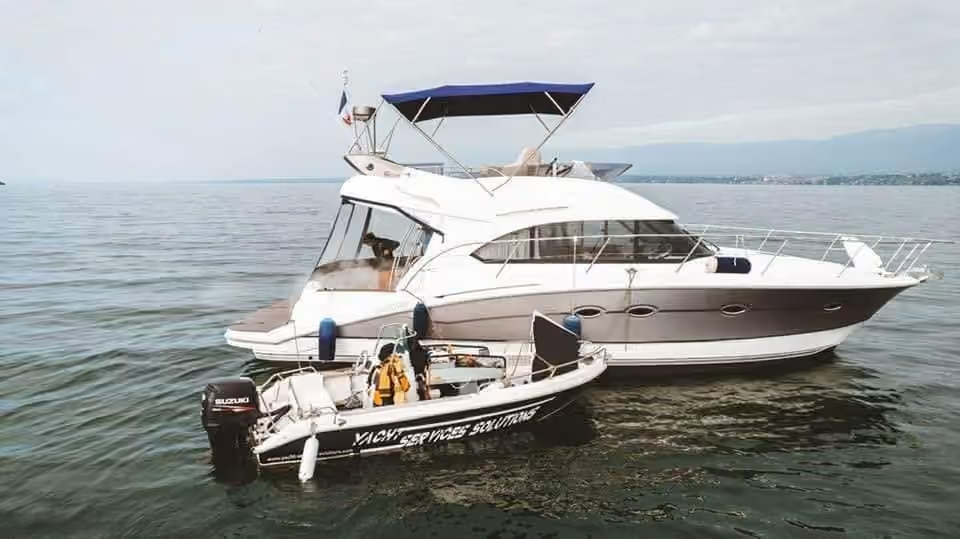
The real issue with the bise, for an owner who does not live by the lake, is finding out about the damage too late. That is exactly what our boat monitoring service is for: regular visits to your berth, a check after every bise episode or weather warning, and a photo report after each visit, with an immediate alert if anything is wrong. Based in the port of Nernier, we cover the marinas of the French shore of Lake Geneva, from Chens-sur-Léman to Évian-les-Bains by way of Messery, Yvoire, Excenevex, Sciez and Thonon: see our service area. If your boat is berthed on the French side while you live in Geneva or further afield, get in touch.
Frequently asked questions
Your questions.
What is the bise on Lake Geneva?
The bise is the cold, dry north-easterly wind funnelled between the Jura and the Alps. It can blow for several days in a row and kicks up a short, steep chop that works boats hard at their berths.
Should I double my mooring lines for the whole cold season?
For a boat that stays afloat and is not visited often, yes, it is good practice: a second line takes over if the first one chafes or slips. It does not replace regular checks for chafe, especially after each bise episode.
What should be checked after a bise storm?
Mooring lines and their chafe points, cleats, fender position and pressure, the hull on the dock side and the neighbour's side, the cover, water in the cockpit and bilge, and battery charge if the bilge pump has been running.