Spring advice
Hard Water on Lake Geneva: Hull, Gelcoat and Stainless
Lake Geneva’s water is hard: as it dries, it leaves minerals behind that streak the hull white, dull the stainless steel and take the shine off the gelcoat. The fix is regular care before the deposits build up: lift them with steam, wipe rather than let things air-dry, protect the surfaces, and keep acids and detergents out of the lake.
Why Lake Geneva’s hard water marks your boat
The lake carries dissolved minerals, mostly calcium carbonate. While the water is running off, you see nothing. But every droplet that evaporates on the deck, a pulpit or the topsides leaves a little deposit behind. Splash after splash and rinse after rinse, those deposits stack up, bake in the sun and trap dust, pollen and the oily film that floats around any marina. Depending on where it comes from, the tap water you rinse with may be hard as well.
On the hull and gelcoat
Limescale first shows up as streaks below the scuppers, rings on the topsides and a greyish band along the waterline. On a dark hull, every mark stands out. The gelcoat loses its gloss too: the more it has been weathered by UV, the more porous it becomes, and the better the scale grips.
On stainless steel
Pulpits, stanchions, cleats and grab rails turn cloudy and spotted. Dull stainless is not just a cosmetic issue: the deposits hold moisture and dirt, which can encourage small spots of surface rust.
On windows and acrylic
Acrylic portlights and windscreens scratch easily. This is often where over-enthusiastic cleaning does the most harm.
What to avoid on a boat in the water
- Acids and household descalers: afloat, the rinse goes straight into the lake. They can also attack seals, anodised aluminium and some varnishes.
- Bucket-and-hose detergents: even the ones sold as gentle end up in Lake Geneva. Marina rules generally only allow light work afloat, with no polluting discharge.
- Abrasives: scouring pads on gelcoat or acrylic, steel wool on stainless. Steel wool leaves iron particles behind that later rust on the surface of the stainless.
- Rinsing and leaving it to dry in the sun: the surest way to lay down a fresh coat of scale.
The method that works: steam, wipe, protect
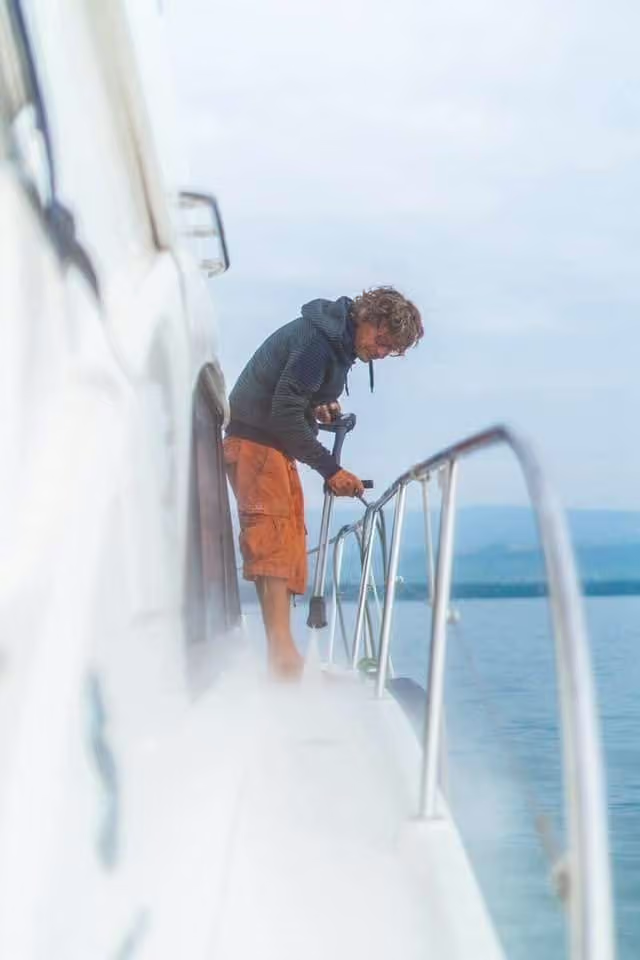
- Lift it with steam. High-temperature steam softens limescale, grease and grime and sanitises as it goes, with no detergent at all. Nothing is discharged into the lake.
- Wipe straight away. A clean microfibre cloth picks up the loosened deposits instead of letting them re-form as they dry.
- Spot-treat old build-up. Scale that has been baking in for several seasons sometimes needs a targeted descaling treatment, applied locally and recovered, rather than a wash-down.
- Polish and protect the gelcoat. Smooth, protected gelcoat holds far less scale, which makes the next clean much quicker.
- Polish and protect the stainless. Polished stainless stays clean longer and comes back with a quick wipe.
Hard-water care checklist through the season
- Start of the season: full clean, gelcoat polished and protected, stainless cleaned and polished.
- After every outing: a quick microfibre wipe on the stainless and splash zones, so lake water never dries on them.
- During the season: regular upkeep, which is far easier than one heavy restoration a year.
- Before covering up for winter: clean first, so you are not sealing deposits and damp under the cover for months.
What about below the waterline?
Limescale is not the only thing that sticks to a hull. Underwater, it is algae and shellfish, including the quagga mussel, now present in Lake Geneva. Dealing with that is a matter of hull cleaning and antifouling, done ashore by boatyards under each marina’s rules. It is not our trade, but we can coordinate the job with a partner yard for you.
Eco steam cleaning, afloat, at your berth
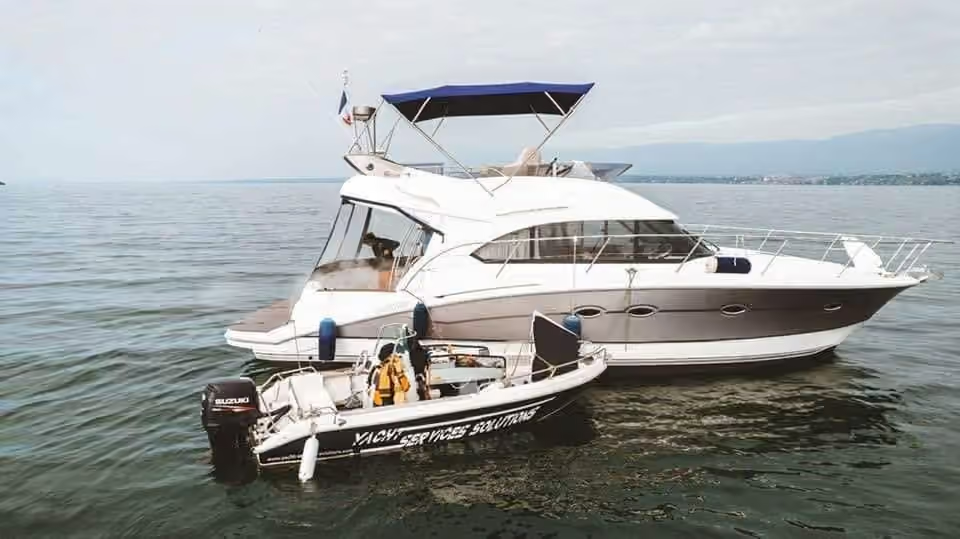
Our boat cleaning and detailing service is built on exactly this method: steam cleaning of the hull, deck, stainless, teak and interior, limescale treatment for hull and stainless, gelcoat polish and protection, and not a drop of chemical product released into the lake. Everything is done afloat, at your berth, with self-contained equipment carried on our work boat, so there is no water or power to arrange on your side. From our base in the port of Nernier, we cover the whole French shore of Lake Geneva, from Chens-sur-Léman to Évian-les-Bains: see our service area, or ask for a quote.
Frequently asked questions
Your questions.
Why does Lake Geneva water leave white marks on my boat?
Because it is hard water: it carries dissolved minerals that stay behind when droplets evaporate. The deposits build up layer by layer, especially on areas that catch spray and sun.
Can I use vinegar or a household descaler on a boat in the water?
It is best avoided. Afloat, the rinse water goes straight into the lake, and acidic products can damage seals, anodised aluminium and some varnishes. Marina rules generally prohibit polluting discharges.
Does steam damage gelcoat or stainless steel?
With professional equipment and the right technique, steam is safe on gelcoat, stainless steel, teak and fabrics. It lifts deposits with heat, with no abrasive scrubbing and no detergent.